

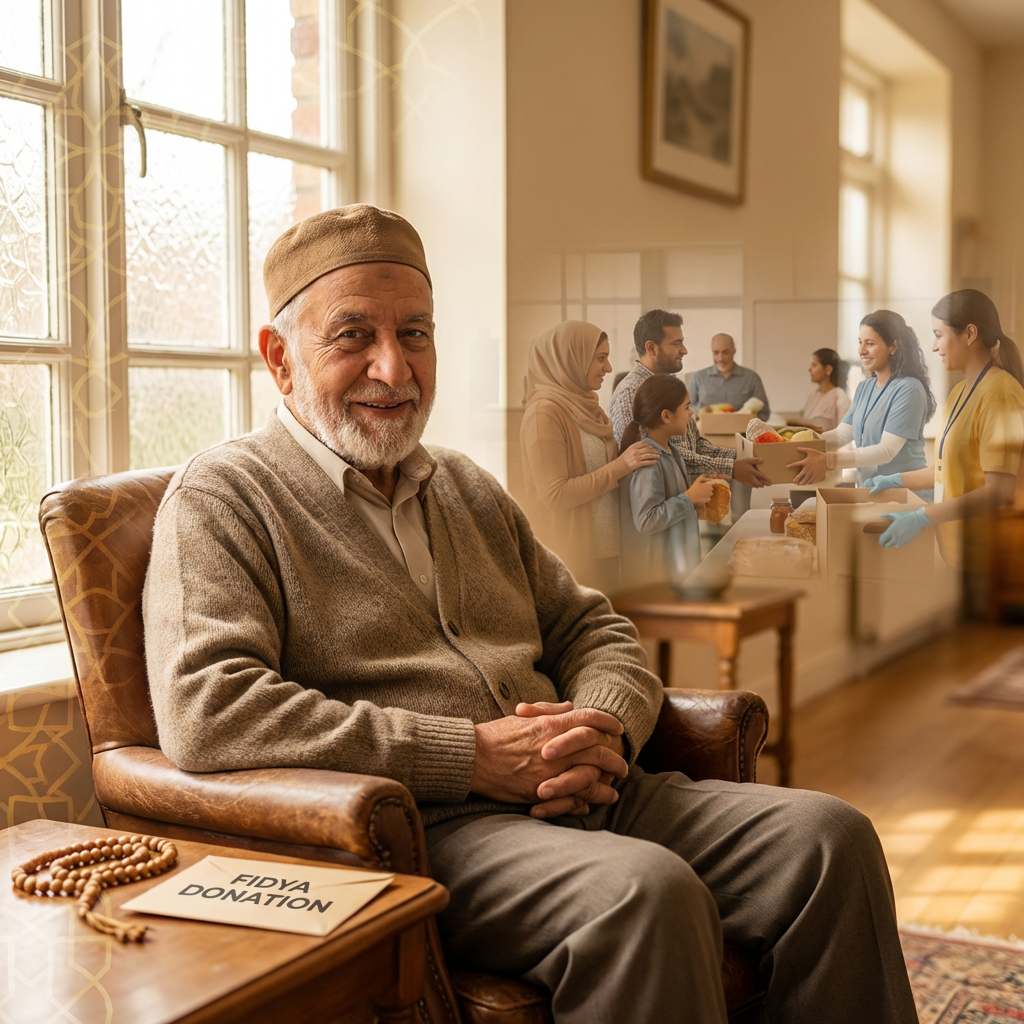
Growing older doesn’t diminish your spiritual worth—it transforms how you serve Allah and your community.
For many elderly Muslims, the approach of Ramadan brings a complex mix of spiritual longing and physical reality. After decades of faithful fasting, the body’s changing needs can make traditional Ramadan observance challenging or even dangerous. Yet Islamic wisdom provides a beautiful solution that honors both your spiritual dedication and your body’s limitations.
Understanding when and how elderly Muslims should transition from fasting to fidya isn’t about spiritual compromise—it’s about recognizing Allah’s mercy and wisdom in providing alternative paths to reward.
The Islamic Foundation for Elder Exemptions
The Quran explicitly acknowledges that circumstances change with age. Allah (SWT) states: “But whoever is ill or on a journey, then an equal number of other days” (2:184). While this verse mentions illness and travel, Islamic scholars have consistently interpreted it to include the challenges of advanced age.
The Prophet Muhammad (peace be upon him) demonstrated remarkable sensitivity to the elderly. He shortened prayers when he heard babies crying, showing concern for the community’s most vulnerable members. This same principle applies to fasting obligations as we age.
Islamic jurisprudence recognizes that elderly Muslims who cannot safely fast—either due to health conditions or the general frailty of advanced age—are not only permitted but encouraged to pay fidya instead of attempting dangerous fasting.
When Age Makes Fidya Appropriate
The transition from fasting to fidya isn’t determined by a specific age but by individual health circumstances. However, several factors commonly affect elderly Muslims:
Medication Requirements
Many elderly Muslims take medications that require specific timing or food intake. Blood pressure medications, diabetes management, heart medications, and other prescriptions often cannot be safely delayed for fasting periods.
When your doctor advises against fasting due to medication needs, fidya becomes your religious obligation rather than attempted fasting that could jeopardize your health.
Dehydration Risks
Aging bodies process fluids differently, making dehydration more dangerous for elderly individuals. The extended fasting periods of Ramadan can pose serious health risks, including kidney problems, blood pressure fluctuations, and increased fall risk.
Chronic Health Conditions
Conditions common in elderly populations—diabetes, heart disease, kidney disease, osteoporosis—often make fasting medically inadvisable. These aren’t temporary illnesses that will resolve; they’re ongoing health realities that require consistent management.
Cognitive Changes
Early-stage dementia or other cognitive changes can make it difficult to safely manage fasting. Forgetting to break fasts at appropriate times or becoming confused about medication schedules can create dangerous situations.
General Frailty
Sometimes aging simply makes the physical demands of fasting too challenging, even without specific medical diagnoses. This natural progression of aging is recognized in Islamic law as a valid reason for fidya.
Making the Difficult Decision
Choosing fidya over fasting can be emotionally challenging for elderly Muslims who have fasted faithfully for decades. This decision often involves:
Family Discussions
Adult children may need to have sensitive conversations with aging parents about fasting safety. These discussions should emphasize that fidya represents continued religious devotion, not spiritual failure.
Medical Consultation
Healthcare providers can offer objective guidance about fasting safety. Getting professional medical advice removes guilt from the decision-making process and provides clarity for religious choices.
Religious Guidance
Speaking with knowledgeable Islamic scholars or imams can help elderly Muslims understand that choosing fidya demonstrates wisdom and proper stewardship of the body Allah entrusted to them.
Understanding Fidya for Elderly Muslims
For elderly Muslims who cannot fast safely, fidya calculation is straightforward:
Current Rate: $15 per missed day of fasting
Full Month: $450 (30 days × $15)
Partial Month: $15 × number of missed days
Unlike younger Muslims who might pay fidya temporarily and later make up missed fasts, elderly Muslims with permanent health limitations pay fidya without the obligation to fast later.
The Spiritual Rewards of Elder Fidya
Paying fidya in old age carries profound spiritual significance that extends beyond simple obligation fulfillment:
Lifetime of Devotion Recognition
Allah recognizes your decades of faithful fasting. Your fidya payments represent the continuation of that devotion in a form appropriate to your current circumstances.
Wisdom in Self-Care
Choosing fidya when fasting becomes dangerous demonstrates the Islamic principle of preserving the body as a sacred trust. This wisdom-based decision reflects spiritual maturity.
Community Service
Your fidya payments directly address food insecurity among families who need support. Your inability to fast becomes a means of feeding others, embodying the Prophet’s teaching about caring for neighbors.
Multiplied Rewards
Islamic teachings suggest that charitable acts in old age carry special weight. Your fidya payments during these years may earn greater spiritual rewards than fasting did in your younger years.
Practical Considerations for Elderly Fidya
Financial Planning
Fixed incomes in retirement can make fidya payments challenging. Consider:
- Budgeting for annual fidya as part of religious obligations
- Seeking family assistance if needed
- Exploring payment plans with charitable organizations
- Remembering that fidya is a religious requirement, not optional charity
Choosing Recipients
Direct your fidya toward organizations that:
- Serve elderly populations facing food insecurity
- Provide culturally appropriate food options
- Maintain transparent financial practices
- Operate in your local community when possible
Family Involvement
Adult children can help elderly parents by:
- Managing fidya payments on their behalf
- Researching appropriate charitable organizations
- Providing emotional support for the transition from fasting
- Understanding that fidya represents continued religious devotion
Supporting Elderly Family Members
If your elderly family members are transitioning to fidya:
Validate Their Decision
Emphasize that choosing fidya demonstrates religious wisdom, not spiritual weakness. Their health-first approach honors Islamic values of body preservation.
Include Them in Ramadan
Ensure elderly family members paying fidya still participate in iftar gatherings, tarawih prayers, and other Ramadan traditions. Their fidya payments make them full participants in the month’s spiritual activities.
Share Impact Stories
Help them understand how their fidya contributions create meaningful change. Stories of families fed through their payments reinforce the spiritual value of their sacrifice.
Respect Their Autonomy
Allow elderly Muslims to make their own decisions about fasting versus fidya when medically possible. Avoid pressuring them in either direction.
The Community Dimension
Elderly Muslims paying fidya collectively create substantial resources for hunger relief. When senior community members choose health-preserving fidya over dangerous fasting, they generate significant funding for food security programs while modeling wise religious decision-making for younger generations.
This demonstrates Islam’s multigenerational approach to community welfare—each life stage contributes differently but meaningfully to collective wellbeing.
Beyond Individual Obligation
The transition from fasting to fidya represents a natural progression in Islamic spiritual life. Just as young children gradually begin fasting as they mature, elderly Muslims gradually transition to fidya as their bodies require it.
This progression reflects Islam’s realistic approach to human limitations and Allah’s mercy in providing appropriate worship methods for every life stage.
Honoring a Lifetime of Devotion
For elderly Muslims, fidya isn’t a consolation prize—it’s recognition of a lifetime spent in Allah’s service. Your decades of faithful fasting, prayers, charity, and community service have established your devotion. Fidya simply represents the continuation of that service in a form appropriate to your current needs.
The $15 you pay for each missed day of fasting represents more than financial obligation. It represents wisdom gained through years of experience, love for your community expressed through feeding others, and trust in Allah’s mercy for those whose circumstances change with age.
Embracing the Transition
Growing older doesn’t diminish your spiritual worth or connection to Allah. It transforms how you serve, moving from physical acts like fasting to charitable acts like fidya. Both forms of worship carry equal spiritual weight when performed with sincere intention.
When age makes traditional fasting impossible or dangerous, fidya becomes your path to continued Ramadan participation. Every payment represents both self-care and community care, embodying Islam’s emphasis on balanced, sustainable religious practice.
Your fidya payments ensure that your advancing years contribute to community welfare rather than detract from it. This transformation of personal limitation into community benefit reflects the profound wisdom of Islamic social systems.
Ready to ensure your fidya payments create maximum impact for hungry families in your community? Learn how to direct your Islamic obligations toward effective hunger relief at
[…] Old age when fasting causes real harm (see elderly Muslims and fasting) […]