

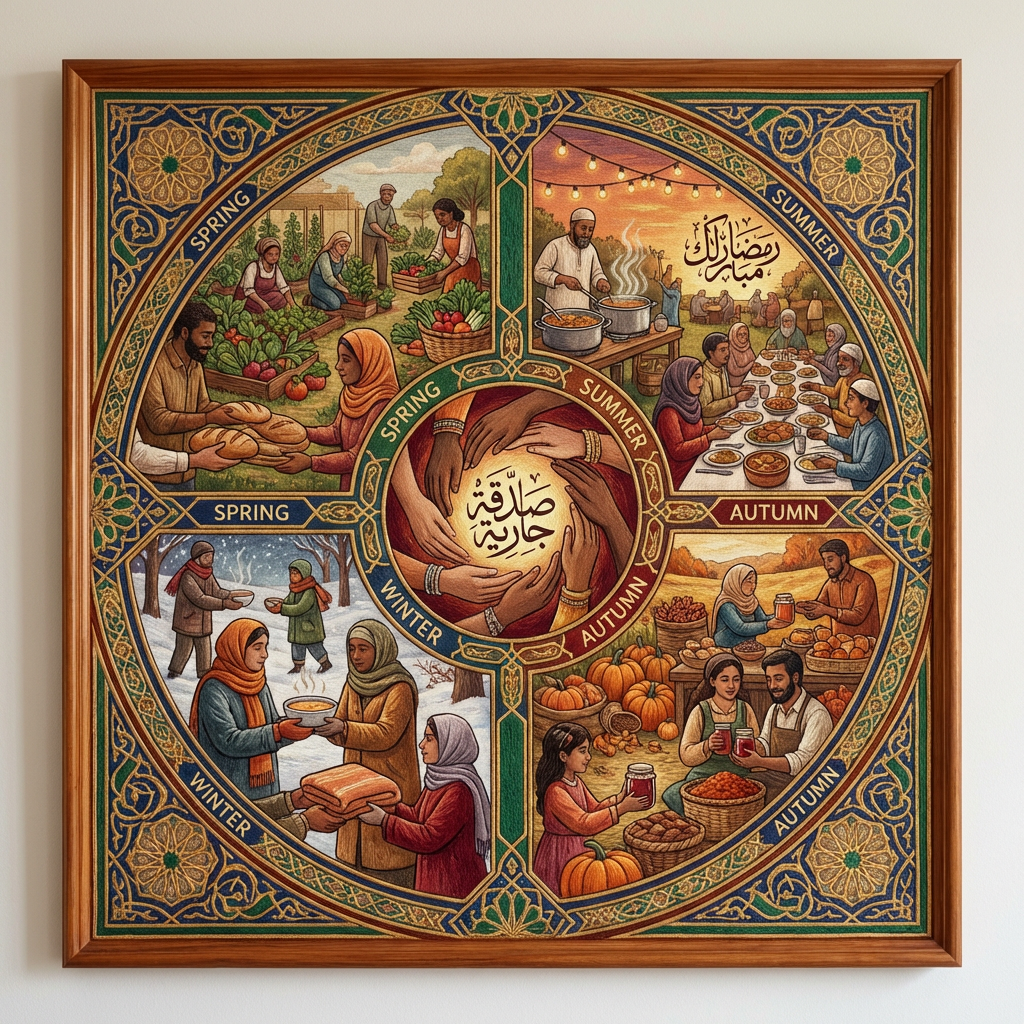
Ramadan intensifies our focus on feeding others, but Islamic obligations to address hunger and food insecurity continue throughout the year with equal spiritual significance.
As Ramadan concludes each year, many Muslims wonder how to maintain the month’s charitable momentum and spiritual connection to community service. The answer lies in understanding that Islamic obligations to feed the hungry aren’t seasonal—they’re woven throughout Islamic practice as fundamental expressions of faith that create lasting impact on food security.
From annual zakat calculations to daily sadaqah opportunities, Islamic teachings provide a comprehensive framework for addressing hunger that operates year-round, creating sustainable support systems that benefit entire communities.
The Foundation: Hunger Relief as Continuous Worship
Islamic teachings establish feeding others as one of the most beloved acts of worship, with spiritual rewards that extend far beyond Ramadan’s blessed month. The Prophet Muhammad (peace be upon him) taught that providing food to those in need is among the actions that lead to Paradise, emphasizing its importance as ongoing religious practice.
This foundation means that every meal you provide, every dollar you contribute to food assistance, and every moment you spend addressing hunger carries the same spiritual weight whether it occurs during Ramadan or any other time of year.
Understanding this principle transforms how Muslims approach charitable giving—shifting from seasonal charity to systematic community support that addresses food insecurity’s root causes while maintaining consistent spiritual development.
Zakat: The Annual Pillar of Food Security
Zakat represents Islam’s most systematic approach to hunger relief, requiring financially capable Muslims to contribute 2.5% of their wealth annually to support those in need. Unlike voluntary charity, zakat is obligatory, creating reliable funding streams for food assistance programs regardless of economic cycles or donor fatigue.
Calculating Your Annual Zakat Impact
When you direct zakat toward hunger relief, the impact becomes substantial:
- **Individual Impact**: A Muslim with $40,000 in zakatable wealth contributes $1,000 annually to food assistance
- **Community Impact**: A mosque community of 200 zakat-eligible families might generate $200,000+ annually for hunger relief
- **National Impact**: American Muslim zakat collectively represents hundreds of millions of dollars in potential food security funding
Strategic Zakat Distribution
Effective year-round zakat giving involves:
Local Food Security: Supporting community food pantries, soup kitchens, and meal delivery programs that serve your immediate area.
International Humanitarian Aid: Addressing global hunger crises through established relief organizations with proven track records.
Economic Empowerment: Funding microfinance, job training, and small business development that helps families achieve food security independence.
Infrastructure Development: Supporting community kitchens, food processing facilities, and distribution networks that serve multiple communities.
Emergency Preparedness: Maintaining reserves for disaster response and economic crisis support when food insecurity spikes suddenly.
Sadaqah: Daily Opportunities for Impact
While zakat provides systematic annual support, sadaqah (voluntary charity) creates daily opportunities to address hunger and food insecurity. Islamic teachings emphasize that even small acts of sadaqah carry significant spiritual and social weight.
Modern Sadaqah Opportunities
Grocery Store Giving: Adding extra items to your shopping for food bank donation, or rounding up purchases to support hunger relief programs.
Restaurant Meals: Paying for meals for families in need, supporting “pay-it-forward” programs, or funding community meal initiatives.
Subscription Giving: Monthly recurring donations to food assistance organizations that provide predictable funding for ongoing programs.
Food Rescue Support: Contributing to programs that redirect surplus food from restaurants and grocery stores to families facing food insecurity.
Community Garden Funding: Supporting urban agriculture initiatives that provide fresh produce access in food desert communities.
Seasonal Intensification Beyond Ramadan
While Ramadan receives the most attention, Islamic calendar includes multiple periods that traditionally increase charitable giving and community focus on hunger relief:
Dhul Hijjah (Pilgrimage Month): The period surrounding Hajj emphasizes sacrifice and community service, making it ideal for increased food assistance giving.
Muharram (Islamic New Year): Beginning the year with charitable commitments sets positive precedents for ongoing community support.
Rabi’ al-Awwal: The month of the Prophet’s birth provides opportunities to emulate his emphasis on feeding others through increased charitable activity.
Rajab and Sha’ban: The months leading to Ramadan offer preparation opportunities for increased charitable giving and community service planning.
Winter Months: Cold weather increases heating costs and food insecurity for many families, making winter an especially important time for sustained food assistance.
Community-Based Hunger Relief
Islamic emphasis on community support creates opportunities for collective action that amplifies individual charitable giving:
Mosque Food Programs
Many Islamic centers operate year-round food assistance programs that serve diverse communities:
- **Weekly Food Pantries**: Regular distribution programs that provide groceries for families facing food insecurity
- **Community Kitchens**: Prepared meal programs that serve hot, nutritious food to anyone in need
- **Holiday Meal Programs**: Special initiatives during Eid celebrations, Thanksgiving, and other holidays that bring communities together around food sharing
- **School Backpack Programs**: Weekend food assistance for children who depend on school meal programs during the week
Interfaith Collaboration
Islamic food assistance often operates through interfaith partnerships that maximize community impact:
- **Shared Facility Usage**: Islamic organizations partnering with churches, synagogues, and community centers to operate food distribution programs
- **Resource Pooling**: Combining funding and volunteer efforts across religious communities to address hunger more effectively
- **Cultural Competency**: Ensuring food assistance programs respect dietary restrictions and cultural preferences of diverse recipients
- **Advocacy Coordination**: Working together on policy initiatives that address hunger’s root causes at local and national levels
Economic Justice and Food Security
Islamic teachings connect hunger relief to broader economic justice principles that address food insecurity’s underlying causes:
Fair Employment Practices
Supporting businesses that provide living wages, health benefits, and stable employment helps families achieve food security independently rather than depending on charitable assistance.
Affordable Housing Advocacy
High housing costs often force families to choose between rent and food. Supporting affordable housing initiatives indirectly supports food security by freeing up family budgets for nutrition.
Healthcare Access
Medical expenses can devastate family food budgets. Supporting healthcare access initiatives helps families maintain both health and nutrition simultaneously.
Education Investment
Supporting educational opportunities—from early childhood programs to adult job training—creates pathways out of food insecurity that benefit entire communities long-term.
Financial Literacy Programs
Teaching budgeting, savings, and financial planning skills helps families manage resources more effectively and build resilience against food insecurity.
Technology and Modern Hunger Relief
Contemporary Islamic giving increasingly leverages technology to maximize hunger relief impact:
Digital Giving Platforms
Smartphone apps and online platforms make it easier than ever to direct zakat and sadaqah toward effective hunger relief programs while maintaining transparency about impact.
Food Distribution Innovation
Technology-enabled food distribution programs use data analytics to identify families most in need, optimize delivery routes, and track nutritional outcomes rather than just meal counts.
Supply Chain Optimization
Digital systems help Islamic organizations coordinate with food suppliers, reduce waste, and ensure culturally appropriate food reaches diverse communities efficiently.
Impact Measurement
Advanced tracking systems allow donors to see exactly how their contributions affect specific families, communities, and regions, strengthening the spiritual connection between giver and recipient.
Global Perspective on Islamic Hunger Relief
Islamic obligations to feed the hungry operate on a global scale, with American Muslim communities increasingly connected to international food security initiatives:
Crisis Response
When natural disasters, conflicts, or economic crises create sudden food insecurity, Islamic giving networks can mobilize resources quickly to provide emergency assistance.
Sustainable Development
Long-term Islamic hunger relief increasingly focuses on sustainable solutions—supporting agricultural development, water access projects, and economic empowerment initiatives that address hunger’s root causes.
Refugee Support
With millions of refugees worldwide facing food insecurity, Islamic organizations provide both immediate food assistance and longer-term integration support that helps displaced families rebuild food security.
Climate Resilience
As climate change affects food production globally, Islamic giving increasingly supports climate-adaptive agriculture, drought-resistant farming, and food system resilience initiatives.
Personal Spiritual Development Through Service
Year-round commitment to feeding others provides ongoing opportunities for spiritual growth and community connection:
Gratitude Cultivation
Regular involvement in hunger relief deepens appreciation for your own food security while building empathy for those facing different circumstances.
Community Bonding
Participating in food assistance programs creates meaningful connections with fellow Muslims and diverse community members who share commitment to addressing hunger.
Character Development
Consistent charitable giving and community service develop qualities like generosity, compassion, and social responsibility that strengthen both individual character and community bonds.
Spiritual Discipline
Maintaining charitable giving throughout the year, not just during Ramadan, develops spiritual discipline and consistency that enhances overall religious practice.
Family Values Transmission
Involving children and family members in year-round hunger relief teaches Islamic values practically while building lifelong commitments to community service.
Measuring Long-Term Impact
Effective year-round Islamic hunger relief focuses on outcomes that extend beyond immediate meal provision:
Food Security Achievement
How many families transition from food assistance recipients to food security independence through economic empowerment and support services?
Community Resilience
How well do communities respond to food security crises when they have established support networks and emergency resources?
Educational Outcomes
How does consistent food assistance affect children’s school performance, graduation rates, and long-term educational achievement?
Health Improvements
What health outcomes improve when families have consistent access to nutritious food through Islamic giving programs?
Economic Mobility
How effectively do comprehensive support programs that include food assistance help families achieve economic stability and upward mobility?
Building Sustainable Systems
The most effective year-round Islamic hunger relief creates systems that sustain themselves and grow stronger over time:
Endowment Development
Establishing waqf (religious endowments) that generate ongoing revenue for food assistance programs ensures perpetual funding that doesn’t depend on annual fundraising.
Volunteer Network Building
Training and organizing volunteer networks that can operate food assistance programs consistently throughout the year, not just during high-profile charitable seasons.
Partnership Development
Creating lasting partnerships with secular organizations, government agencies, and other faith communities that amplify Islamic giving through coordinated action.
Policy Advocacy
Engaging in policy advocacy that addresses hunger’s root causes—minimum wage, healthcare access, affordable housing, and social safety net programs.
Innovation Investment
Supporting research and development of new approaches to hunger relief, food distribution, and community resilience that can be scaled and replicated.
Cultural Integration and American Muslim Identity
Year-round Islamic hunger relief helps American Muslims integrate religious values with civic engagement:
Civic Participation
Food assistance work often leads to broader civic engagement—voting, advocacy, community organizing—that strengthens both Islamic communities and American democracy.
Interfaith Understanding
Working alongside diverse communities on hunger relief builds mutual understanding and breaks down stereotypes while maintaining Islamic identity and values.
Youth Development
Involving young Muslims in year-round community service develops leadership skills and civic engagement that benefit both Islamic communities and broader society.
Professional Integration
Many Muslims find ways to integrate hunger relief into their professional lives—whether through corporate giving programs, professional skills volunteering, or career choices that address social issues.
Overcoming Common Challenges
Sustaining year-round commitment to hunger relief requires addressing practical challenges:
Donor Fatigue Prevention
Varying giving opportunities, sharing impact stories, and connecting donors directly with recipients helps maintain enthusiasm for ongoing charitable giving.
Resource Coordination
Effective coordination between Islamic organizations prevents duplication while ensuring comprehensive coverage of community needs.
Cultural Sensitivity
Training volunteers and staff to serve diverse populations respectfully while maintaining Islamic values and identity.
Seasonal Fluctuation Management
Planning for increased need during certain seasons (winter, summer break from school meals) while maintaining consistent year-round services.
Quality Control
Ensuring that rapid scaling of hunger relief programs maintains quality, dignity, and effectiveness rather than just increasing quantity.
The Prophetic Model for Year-Round Service
The Prophet Muhammad (peace be upon him) demonstrated consistent attention to community welfare that provides a model for contemporary year-round hunger relief:
Daily Awareness
The Prophet regularly asked about community members’ wellbeing and immediately addressed any hunger or need he discovered.
Systematic Sharing
He established regular practices for food distribution and community support that operated consistently, not just during special occasions.
Economic Justice Focus
His teachings emphasized fair trade, worker rights, and economic systems that prevented hunger rather than just addressing its symptoms.
Community Responsibility
He taught that every Muslim has responsibility for community welfare, making hunger relief a shared obligation rather than individual charity.
Future Directions and Innovation
As Islamic communities grow and develop in America, year-round hunger relief continues evolving:
Technology Integration
Artificial intelligence, data analytics, and mobile technology increasingly enable more effective, efficient, and dignified hunger relief programs.
Policy Engagement
Islamic organizations increasingly engage in policy advocacy that addresses hunger’s root causes at local, state, and federal levels.
Interfaith Leadership
American Muslim communities often lead interfaith initiatives on hunger relief, drawing on Islamic principles while building broader coalitions.
Youth Innovation
Young American Muslims develop innovative approaches to hunger relief that combine Islamic values with contemporary tools and methods.
Global Connection
American Islamic hunger relief increasingly connects with global initiatives, sharing resources and learning across international Islamic communities.
The Continuous Call to Action
Islamic obligations to feed the hungry don’t pause when Ramadan ends—they continue throughout the year as fundamental expressions of faith that create lasting community impact. Whether through systematic zakat giving, daily sadaqah opportunities, or organized community service, every Muslim has ongoing opportunities to address hunger and food insecurity.
The spiritual rewards remain constant, the community needs persist, and the opportunities for meaningful impact continue year-round. When you understand hunger relief as continuous worship rather than seasonal charity, you transform both your own spiritual development and your community’s resilience.
Making It Personal and Practical
As you consider your own year-round commitment to feeding others, remember that Islamic teachings emphasize consistency over quantity. Regular small contributions often create more impact than occasional large donations, and sustained community involvement builds stronger relationships than sporadic volunteering.
Start where you are, use what you have, and do what you can. Whether that means monthly donations to food assistance programs, weekly volunteering at community kitchens, or simply being more aware of hunger issues in your daily life, every action aligns with Islamic values and contributes to community wellbeing.
The call to feed others echoes throughout Islamic teachings because hunger represents one of humanity’s most fundamental challenges. When Muslims respond to this call consistently throughout the year, they embody Islamic values while building more just, compassionate, and resilient communities for everyone.
Your year-round commitment to addressing hunger isn’t just about fulfilling religious obligations—it’s about creating the kind of community where everyone has access to nutritious food, where no family faces the impossible choice between rent and groceries, and where Islamic values of justice and compassion transform society for the better.
Ready to transform your Islamic giving into year-round impact that creates lasting food security for families in need?