

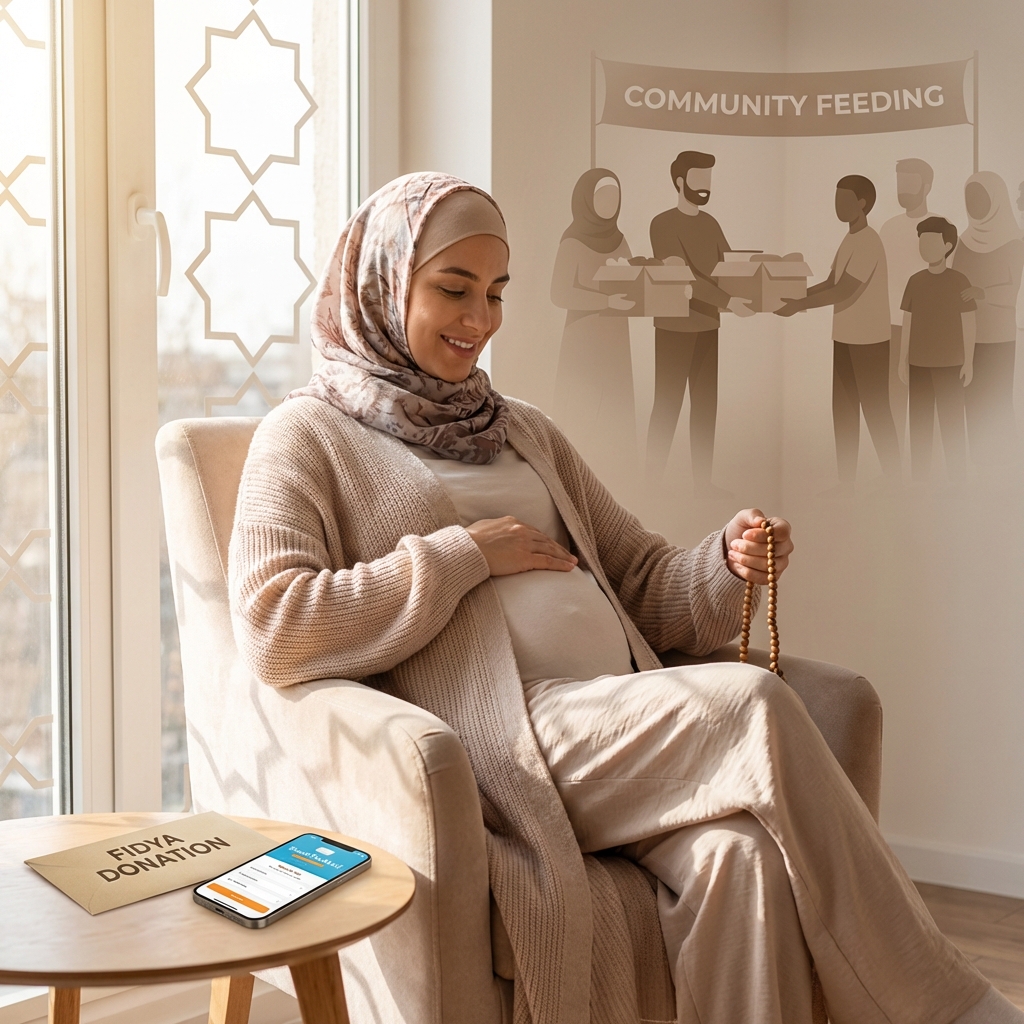
Your growing baby doesn’t diminish your spiritual connection to Ramadan—it transforms how you participate in this sacred month.
For many Muslim women, discovering pregnancy during or before Ramadan brings a complex mix of joy and spiritual uncertainty. After years of faithful fasting, the prospect of missing Ramadan observance can feel spiritually isolating. Yet Islamic wisdom provides clear guidance that prioritizes both maternal and fetal health while maintaining meaningful spiritual participation.
Understanding when and how pregnancy affects fasting obligations—and when fidya becomes your path to continued Ramadan observance—ensures you honor both your developing baby and your faith.
Islamic Foundation for Pregnancy Exemptions
The Quran explicitly acknowledges that circumstances change during pregnancy and breastfeeding. While the text doesn’t specifically mention pregnancy, Islamic scholars have consistently interpreted the verse “But whoever is ill or on a journey, then an equal number of other days” (2:184) to include pregnancy-related health considerations.
The Prophet Muhammad (peace be upon him) demonstrated remarkable concern for maternal welfare. Islamic traditions record his guidance about prayer modifications during pregnancy and his emphasis on protecting both mother and child’s wellbeing. This same protective principle extends to fasting obligations.
Islamic jurisprudence recognizes that pregnant women who cannot safely fast—either due to medical advice or personal assessment of risk—are not only permitted but encouraged to pay fidya instead of attempting potentially dangerous fasting.
When Pregnancy Makes Fasting Unsafe
The decision to fast or pay fidya during pregnancy isn’t determined by pregnancy alone, but by individual health circumstances and medical guidance. However, several factors commonly affect pregnant Muslim women:
First Trimester Challenges
Early pregnancy often brings nausea, vomiting, and extreme fatigue that can make fasting dangerous. Severe morning sickness (hyperemesis gravidarum) can lead to dehydration and nutritional deficiencies that threaten both maternal and fetal health.
When early pregnancy symptoms make it difficult to maintain proper nutrition and hydration, fidya becomes a safer alternative to fasting that could worsen these conditions.
Nutritional Requirements
Pregnancy increases caloric and nutritional needs significantly. The developing baby requires consistent maternal nutrition for proper growth and development. Extended fasting periods can compromise this nutritional supply.
Healthcare providers often advise pregnant women to eat small, frequent meals to maintain stable blood sugar and prevent nausea—a pattern incompatible with traditional Ramadan fasting.
Hydration Concerns
Pregnant women need increased fluid intake to support expanded blood volume and amniotic fluid production. Dehydration during pregnancy can trigger contractions, reduce amniotic fluid, and compromise fetal development.
The extended fasting periods of Ramadan can make adequate hydration challenging, particularly in hot climates or during summer months when daylight hours are longer.
Medical Conditions
Pregnancy-related conditions like gestational diabetes, preeclampsia, or hyperemesis gravidarum often make fasting medically inadvisable. These conditions require careful management that includes regular medication, monitoring, and nutritional control.
High-Risk Pregnancies
Women with high-risk pregnancies due to age, previous pregnancy complications, multiple pregnancies, or underlying health conditions may need to avoid any additional stressors, including fasting.
Making the Fasting Decision
Choosing between fasting and fidya during pregnancy involves several important considerations:
Medical Consultation
Speaking with healthcare providers who understand both pregnancy physiology and Islamic obligations provides objective guidance about fasting safety. Many Muslim physicians can offer culturally sensitive advice that respects religious values while prioritizing health.
Personal Assessment
Islamic law recognizes that pregnant women are often the best judges of their own physical capabilities. If fasting causes significant discomfort, weakness, or concern about the baby’s wellbeing, this personal assessment carries weight in religious decision-making.
Trimester Considerations
Some women find they can fast safely during certain trimesters but not others. Second trimester often brings relief from early pregnancy symptoms, while third trimester may bring new challenges like heartburn, frequent urination, and increased nutritional needs.
Individual Pregnancy Patterns
Every pregnancy is different. Some women maintain energy and health while fasting, while others experience significant difficulties. Previous pregnancy experiences can inform current decisions, but each pregnancy should be evaluated independently.
Understanding Fidya for Pregnant Women
For pregnant women who cannot fast safely, fidya calculation follows standard Islamic guidelines:
Current Rates: Approximately $5-15 per missed day of fasting, depending on the organization and local food costs
Full Month: $150-450 (30 days)
Partial Month: Payment only for days when fasting is unsafe
Unlike temporary illness that requires making up missed fasts later (qada), pregnancy-related fidya doesn’t typically require future makeup fasting, especially if breastfeeding follows pregnancy and creates ongoing fasting challenges.
The Spiritual Dimension of Pregnancy Fidya
Paying fidya during pregnancy carries profound spiritual significance that honors both motherhood and community service:
Nurturing Life
Your fidya payments represent the Islamic principle of preserving life—both your own and your developing baby’s. This life-preserving choice reflects core Islamic values about protecting the vulnerable.
Continued Spiritual Participation
Rather than missing Ramadan entirely, fidya ensures you remain spiritually connected to the month’s themes of sacrifice, charity, and community service. Your financial sacrifice parallels the physical sacrifice of fasting.
Community Support
Your fidya payments directly address food insecurity among families who need support. Your pregnancy becomes a means of feeding others, embodying Islamic teachings about caring for community members.
Modeling Wisdom
Choosing health-preserving fidya over potentially dangerous fasting demonstrates wisdom and proper stewardship of the body and life Allah has entrusted to you.
Practical Considerations for Pregnant Women
Financial Planning
Pregnancy often comes with increased medical expenses and preparation costs for the baby. Consider:
- Budgeting for fidya as part of pregnancy-related expenses
- Seeking family support if needed
- Exploring payment plans with charitable organizations
- Remember that fidya is a religious requirement when fasting becomes unsafe
Choosing Recipients
Direct your fidya toward organizations that:
- Support pregnant and nursing mothers facing food insecurity
- Provide nutritionally appropriate food options
- Serve families with young children
- Maintain cultural sensitivity in food distribution
Family Understanding
Help family members understand that pregnancy fidya represents:
- Responsible maternal care, not spiritual weakness
- Continued religious devotion through alternative means
- Islamic wisdom about protecting vulnerable life
- Meaningful participation in Ramadan’s charitable spirit
Trimester-Specific Guidance
First Trimester (Weeks 1-12)
Morning sickness, fatigue, and food aversions often make fasting challenging. Many women find fidya more appropriate during this period, especially if experiencing severe nausea or vomiting.
Second Trimester (Weeks 13-26)
Often called the “golden period” of pregnancy, some women feel well enough to fast during this time. However, increased nutritional needs and growing baby still require careful consideration.
Third Trimester (Weeks 27-40)
Physical discomfort, frequent urination, heartburn, and increased caloric needs often make fasting difficult. Many women choose fidya during this period to ensure adequate nutrition for final fetal development.
Supporting Pregnant Family Members
If pregnant family members are considering fasting versus fidya:
Respect Their Autonomy
Allow pregnant women to make their own decisions about fasting capability. Avoid pressuring them to fast if they feel unsafe, or to pay fidya if they feel capable of fasting.
Provide Emotional Support
Acknowledge that choosing fidya can feel emotionally difficult for women who have fasted faithfully in previous years. Emphasize that this choice demonstrates wisdom and proper care for the baby.
Include Them in Ramadan
Ensure pregnant women paying fidya still participate in iftar gatherings, tarawih prayers, and other Ramadan traditions. Their fidya payments make them full participants in the month’s spiritual activities.
Practical Assistance
Help with fidya payment logistics, research appropriate charitable organizations, or provide financial assistance if needed.
Breastfeeding Considerations
Many women who pay fidya during pregnancy continue facing similar challenges while breastfeeding:
Nutritional Demands
Breastfeeding requires significant calories and nutrients to maintain milk production while supporting maternal health.
Hydration Requirements
Adequate fluid intake is crucial for milk production and maternal wellbeing.
Medication Timing
Some breastfeeding mothers take medications or supplements that require specific timing with food intake.
Sleep Disruption
Night feedings and sleep deprivation can make the additional challenge of fasting unsafe or impractical.
The Continuum of Maternal Care
Islamic recognition of pregnancy and breastfeeding challenges acknowledges that maternal responsibilities often span multiple Ramadan seasons. This isn’t a temporary inconvenience but a natural phase of life that requires adjusted religious observance.
The wisdom embedded in Islamic law recognizes that women’s bodies undergo profound changes during pregnancy and breastfeeding that can make traditional fasting unsafe for extended periods. Fidya provides a pathway for continued religious participation that honors both maternal responsibilities and spiritual obligations.
Cultural Sensitivity and Community Support
Different Muslim communities have varying cultural attitudes toward pregnancy and fasting. Some cultures pressure women to fast regardless of circumstances, while others are more supportive of health-first approaches.
Understanding that Islamic law prioritizes maternal and fetal health over cultural expectations helps pregnant women make decisions based on religious guidance rather than social pressure.
Medical and Religious Harmony
Modern obstetric care emphasizes regular nutrition, hydration, and stress management during pregnancy—principles that align perfectly with Islamic emphasis on preserving life and health. When medical advice conflicts with traditional fasting, Islamic jurisprudence consistently supports the life-preserving choice.
This harmony between medical wisdom and Islamic values reinforces that choosing fidya during pregnancy represents faithful adherence to Islamic principles rather than religious compromise.
Planning for Future Ramadans
Women who pay fidya during pregnancy often wonder about future Ramadan observance:
Individual Assessment
Each pregnancy is different, and each Ramadan brings different circumstances. Previous decisions don’t determine future choices.
Breastfeeding Considerations
Extended breastfeeding may mean several years of fidya payments rather than traditional fasting, which is completely acceptable within Islamic law.
Family Planning
Some couples consider pregnancy timing in relation to Ramadan, though Islamic teaching emphasizes that Allah’s timing is perfect regardless of human planning.
Embracing Maternal Spirituality
Pregnancy doesn’t diminish spiritual connection to Ramadan—it transforms it. When you pay fidya instead of fasting, you’re participating in Ramadan through:
- Sacrifice: Financial giving that parallels the physical sacrifice of fasting
- Community Service: Feeding families in need through your charitable contributions
- Spiritual Growth: Learning to trust Islamic wisdom about protecting life and health
- Maternal Devotion: Prioritizing your baby’s wellbeing as an act of worship
Your growing baby represents hope, blessing, and trust from Allah. Protecting that life through appropriate nutrition, hydration, and stress management—even when it means paying fidya instead of fasting—demonstrates faithful stewardship of the precious life developing within you.
The Bigger Picture
When pregnant Muslim women choose fidya over potentially unsafe fasting, they model important values for their families and communities:
- Health Wisdom: Demonstrating that Islam prioritizes wellbeing over rigid rule-following
- Maternal Responsibility: Showing that caring for developing life is an act of worship
- Community Service: Transforming personal limitations into charitable giving that feeds others
- Religious Flexibility: Illustrating how Islamic law accommodates life’s natural changes
Your fidya payments during pregnancy represent more than religious obligation fulfillment—they demonstrate the beautiful flexibility of Islamic law that honors both spiritual devotion and the sacred responsibility of nurturing new life.
Ready to ensure your pregnancy fidya creates meaningful impact for families facing food insecurity? Learn how to direct your Islamic obligations toward effective maternal and child nutrition programs